
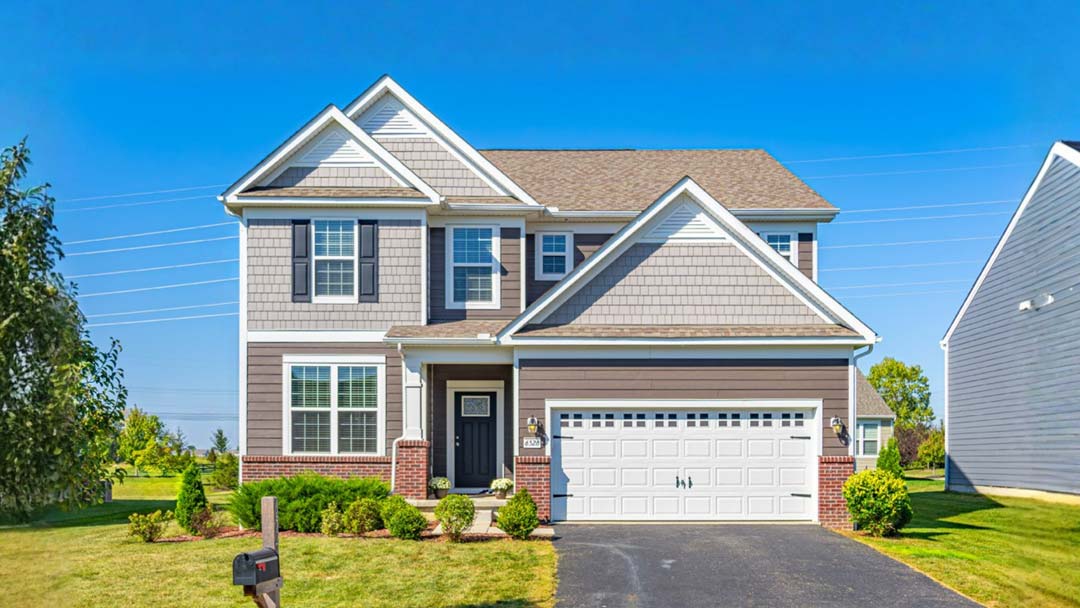
When the Market Reveals More Than Price
A Central Ohio real estate broker shares a candid story about pricing expectations, market feedback, and what a difficult listing revealed about trust.
Central Ohio real estate is settling into a different rhythm. There is still activity, desirable homes continue to attract attention, and people have plenty of reasons to move. The difference is that decisions are not always happening at the speed we became accustomed to, which gives everyone involved more opportunity to look closely at what they are doing, and I see that as healthy.
When inventory was extremely tight, urgency influenced almost every part of a transaction. Buyers worried about losing the house while they were still deciding whether they wanted it, and owners could put a home up for sale and receive an answer from the public fairly quickly. There was little time to study why one strategy worked and another did not, but a little breathing room changes the conversation.
Median Sale Price
$350,000
+2.3% YoY
Days on Market
28 days
+3.7% YoY
Active Inventory
6,193 homes/condos
2.4-month supply
Sale-to-List Price Ratio
99.3% (of last list price)
+0.1 pts YoY
$350,000 (+2.3% YoY)
28 days (+3.7% YoY)
6,193 homes/condos (2.4-month supply)
99.3% (of last list price) (+0.1 pts YoY)
For someone selling a home in Central Ohio, the first few weeks on the market can now reveal quite a bit. Online interest, showing activity, comments after appointments, nearby competition and offers all help build a picture of how the home is being received, and none of it should be considered in isolation. Ten showings without an offer can mean something very different from no showings at all, and a nearby home going under contract deserves closer examination before anyone assumes the answer is simply to reduce the price.
This is where experience becomes useful, because there is no button an agent can push to manufacture demand. We can recommend a strategy, prepare the home, expose it to the public, study competing inventory and make adjustments when warranted, but the final response belongs to the people deciding whether they want to purchase it. That limitation can be difficult to accept, particularly for someone whose expectations were shaped during the years when homes routinely moved at extraordinary speed.
There is no button an agent can push to manufacture demand.
Jennifer Jones
I have written previously about a seller relationship that eventually reached a point where I chose to walk away. I am not interested in revisiting the details, but I took something valuable from the experience: difficult conditions require enough respect between a client and professional for an honest conversation to survive. I recently saw the other side of that lesson.
While representing purchasers, my buyers were out of the area when funds needed to be wired and encountered banking security requirements that required additional verification and more time to complete. They gave me their word that they were working through the process, and that was exactly what they were doing. Unfortunately, the contractual clock continued to run while they worked through those additional layers.
The delay became serious enough that the contract was terminated, putting the purchase and $5,000 in earnest money potentially at risk. Despite the pressure, my buyers never blamed me or looked for someone to fault, and we stayed focused on getting through the requirements in front of us. By the grace of God, the wire was ultimately completed, the transaction came back together, and we closed on time.
Sometimes everyone is doing what they are supposed to do and a complication still develops...
Jennifer Jones
That experience says something important about the transactions we may see as the Central Ohio real estate market becomes more balanced. Real estate involves contracts with firm timelines, but it also involves banks, lenders, title companies and security procedures that do not always move at the same pace. Sometimes everyone is doing what they are supposed to do and a complication still develops, and that is when communication, professional judgment and the relationship between client and agent become especially important.
This is also why home inspections may become a larger part of negotiations. When someone has several suitable homes available, a significant defect carries a different weight than it might when there is nothing comparable to purchase. At the same time, an inspection report is not an invoice for the owner to repair everything an inspector happens to mention.
The useful work is determining significance. Is the component simply old, or is it failing? Is the condition routine maintenance, or does it indicate a larger problem? Does another qualified professional need to evaluate it? What remedies does the agreement actually provide? Those questions are far more useful than deciding which side “won” an inspection.
The same kind of analysis applies to pricing. A recent comparable sale provides evidence, but it does not exist in a vacuum, because someone shopping today is also looking at what is available today. A competing home may have a newer roof, lower taxes, fewer deferred maintenance items or a layout people prefer, and a builder may offer financing incentives that make new construction surprisingly competitive with resale. Suddenly, two houses with similar asking prices are not financially similar at all.
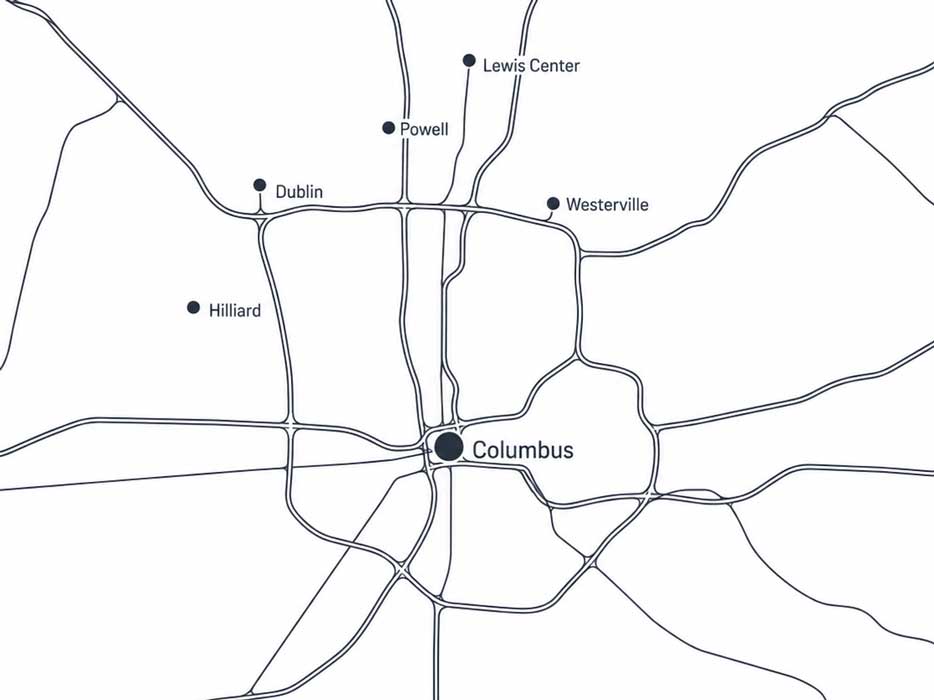
That is why broad headlines about the Central Ohio housing market only take us so far. Dublin, Powell, Lewis Center, Westerville, Hilliard and Columbus do not move in perfect unison, nor does every price range within those communities, and even neighboring homes can perform differently because of condition, lot, improvements, taxes or competition. I expect those individual differences to become more visible over the coming months.
That does not lead me to a gloomy conclusion. Quite the opposite: a less frantic environment can give someone buying a home in Central Ohio enough room to understand what they are getting, and it can give a seller better feedback about how their home fits among the available alternatives. It also places greater responsibility on the professionals involved. Finding a house or putting one in the MLS is only part of the work; understanding construction concerns, interpreting inspection findings, watching contractual dates, recognizing financial risk, and knowing when a strategy deserves adjustment become much easier to see when sheer speed is no longer carrying everything forward.
Perhaps that is the most interesting part of what is happening in the Central Ohio real estate market: we are getting back to a transaction where judgment has room to show itself. Not every home will take longer to sell. Not every buyer will gain leverage. Not every inspection will produce a difficult negotiation, and there will certainly be properties that attract immediate competition. The difference is that assumptions deserve more scrutiny now.
For people willing to look carefully at the home, the numbers, the agreement and the circumstances surrounding the transaction, I think the next phase of Central Ohio real estate offers plenty of opportunity.
The difference is that assumptions deserve more scrutiny now.
Jennifer Jones
It depends more on the specific property and price range than on a single market-wide answer. Homes are taking longer to sell than they did during the highest-demand years, but well-priced, well-presented properties in desirable areas are still moving. The first few weeks on the market are usually the clearest signal for any individual listing.
There’s no single number that applies to every neighborhood or price range — Dublin, Powell, Lewis Center, Westerville, Hilliard and Columbus can each behave differently. A slower pace than a few years ago is common, but it doesn’t mean a home won’t sell quickly if it’s priced and positioned well.
Not every finding is equally significant. The useful step is figuring out whether an issue reflects normal wear, a real defect, or something a specialist needs to evaluate further — and then working through what the purchase agreement actually allows for in terms of repairs or credits.
No. Even neighboring communities can perform differently depending on inventory, price point, school districts, new construction activity and local competition, so a headline about “the Central Ohio market” rarely applies evenly across every area.
Jennifer N. Jones is an Ohio Broker and REALTOR® with more than 15 years of experience in residential and commercial construction administration, property management, and real estate.
Her perspective was shaped long before becoming a broker. Years spent reviewing construction, managing projects, evaluating properties, and navigating real estate transactions taught her that what is overlooked often matters just as much as what is obvious.
She approaches every transaction by looking beyond the surface—examining details, recognizing patterns, and asking the questions that help clients better understand the home and the decisions before them.
Jennifer serves buyers and sellers throughout Powell, Lewis Center, Delaware, Westerville, Dublin, Columbus, Worthington, Hilliard, New Albany, Galena, Plain City, Sunbury, and surrounding Central Ohio communities.
A Central Ohio real estate broker shares a candid story about pricing expectations, market feedback, and what a difficult listing revealed about trust.
Learn why Residential Property Disclosures are only the beginning. Discover how due diligence helps buyers make informed decisions throughout Central Ohio.
Selling a home takes more than great marketing, honest communication and strategic pricing are what actually get results.